If you’re wondering how to increase domain authority fast, you’re not alone. Some websites consistently rank on the first page of Google while others struggle to gain visibility, and domain authority can play an important role. Whether you’re publishing landing pages with a tool like Version or managing a large content site, improving your website’s authority can help strengthen your SEO performance and attract more organic traffic.
In this guide, we’ll explain what domain authority is, why it matters for SEO, and how to increase domain authority fast with proven strategies. From building high-quality backlinks to creating valuable content and improving your website, these actionable steps can help you steadily raise your authority and improve your search rankings over time. No vague advice, just things that work.
What Is Domain Authority?
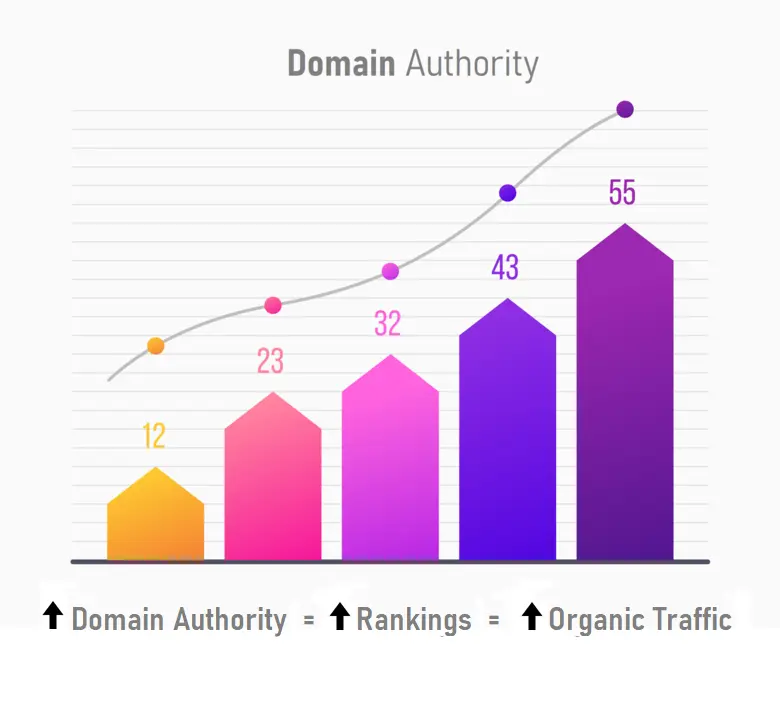
Domain Authority (DA) is a metric created by Moz that predicts how likely a website is to rank in search engine results. It runs on a scale from 1 to 100. Higher scores mean a stronger likelihood of ranking well.
A few things worth knowing upfront:
- Google doesn’t use DA directly. It’s a third-party metric, not a ranking factor in Google’s algorithm. But the things that improve DA i.e quality backlinks, strong content, good technical health, are the same things Google rewards.
- It’s a comparative metric. A DA of 35 isn’t “bad” in isolation. What matters is how your score compares to the sites you’re competing against. If your competitors sit at 30, a 35 puts you in a solid position.
- It’s logarithmic. Moving from 10 to 20 is much easier than moving from 60 to 70. Don’t get discouraged if growth slows as your score climbs.
Other tools have similar metrics for instance, Ahrefs has Domain Rating (DR), and Semrush has Authority Score. They measure slightly different things, but they all tell you roughly the same story about your site’s overall strength.
Why Domain Authority Matters for Your Site
Even though Google doesn’t read your DA score, the metric is a useful shorthand for your site’s competitive position.
A higher DA generally means:
- Faster rankings for new content. When you publish a new page on an authoritative domain, it often ranks within days. The same page on a low-authority site might take months or never rank at all.
- More resilience during algorithm updates. Sites with strong backlink profiles and established trust tend to weather Google updates better than thin, weak sites.
- Better partnership opportunities. Other site owners check your DA before agreeing to guest posts, collaborations, or link exchanges. A stronger score opens more doors.
Think of DA as a proxy for trust. The more the web trusts your site, the easier everything else becomes.
How to Increase Domain Authority
1. Build High-Quality Backlinks
Backlinks are the single biggest driver of domain authority. But not all links are equal, one link from a respected industry publication is worth more than a hundred links from random directories.
Create Content People Actually Want to Link To
The most sustainable link building strategy is making things worth linking to. This includes:
- Original research and data. Run a survey, analyze your own usage data, or compile industry statistics. Writers and journalists need data to cite, and they’ll link to whoever provides it.
- In-depth guides. A genuinely comprehensive guide on a topic, one that’s better than anything else ranking, attracts links naturally over time.
- Free tools and calculators. A simple calculator, template, or generator can earn hundreds of links if it solves a real problem.
- Visual assets. Infographics, charts, and diagrams get embedded and credited with links.
Guest Post on Relevant Sites
Guest posting still works when you do it right. The key is relevance and quality. Pitch sites in your industry that have real audiences, and write something genuinely useful for their readers.
Avoid sites that exist only to sell guest posts. If a site publishes ten unrelated sponsored posts a day, a link from it won’t help you and might hurt.
Use Digital PR
Journalists and bloggers constantly need expert quotes and sources. Sign up for services like HARO alternatives (Connectively, Qwoted, or Featured) and respond to relevant queries in your field. A single mention in a major publication can give your authority a noticeable bump.
You can also create newsworthy stories around your own brand that is, product launches, interesting data findings, or a unique take on an industry trend, and pitch them directly.
Fix Broken Links and Reclaim Mentions
Two quick wins here:
- Broken link building: Find broken links on relevant sites using a tool like Ahrefs or Check My Links. If the dead page covered a topic you’ve written about, email the site owner and suggest your page as a replacement.
- Unlinked brand mentions: Set up alerts for your brand name. When someone mentions you without linking, a polite email often turns that mention into a link.
2. Publish Content That Ranks and Earns Trust
Links tell Google your site is trustworthy, but content is what gives people a reason to link in the first place. Your content strategy directly affects how fast your authority grows.
Target Topics You Can Actually Win
When your DA is low, chasing broad, competitive keywords is a waste of time. Instead, go after long-tail keywords, longer, more specific search phrases with lower competition.
For example, instead of targeting “email marketing,” target “email marketing for wedding photographers.” You’ll rank faster, get traffic sooner, and build topical authority that helps you compete for bigger terms later.
Build Topical Authority With Content Clusters
Google rewards sites that demonstrate deep knowledge of a subject. Instead of publishing random one-off posts, organize your content into clusters:
- Create a comprehensive pillar page covering a broad topic.
- Write supporting articles on related subtopics.
- Link the supporting articles to the pillar page and to each other.
This structure helps search engines understand what your site is about, and it keeps visitors on your site longer, both good signals.
Keep Your Content Fresh
Old, outdated content drags your site down. Set a schedule to review your top pages every six to twelve months. Update statistics, refresh examples, fix broken links, and expand sections that feel thin. Google notices when content gets refreshed, and rankings often improve as a result.
3. Strengthen Your Technical SEO
Great content and links won’t save a site with technical problems. Technical issues make it harder for search engines to crawl, index, and rank your pages, which caps your authority growth no matter how good your content is.
Fix Crawlability and Indexing Issues
Start with the basics:
- Submit an XML sitemap through Google Search Console.
- Check your robots.txt file to make sure you’re not accidentally blocking important pages.
- Review the Coverage report in Search Console for indexing errors and fix them.
- Use canonical tags to avoid duplicate content issues.
Improve Site Speed
Slow sites frustrate users and get ranked lower. Run your site through PageSpeed Insights and address the biggest issues first:
- Compress and properly size images.
- Enable caching and use a content delivery network (CDN).
- Minimize render-blocking JavaScript and CSS.
- Choose quality hosting, cheap shared hosting often causes slow response times.
If you’re using a modern page builder or publishing platform, a lot of this is handled for you, which removes one more technical headache.
Make Sure Your Site Works on Mobile
Google uses mobile-first indexing, meaning it primarily looks at the mobile version of your site. Test your pages on actual phones, not just a resized browser window. Buttons should be tappable, text should be readable without zooming, and nothing should require horizontal scrolling.
Use Internal Links Strategically
Internal linking is underrated. It helps search engines discover your pages, spreads link equity across your site, and guides visitors to related content.
A few rules of thumb:
- Link from high-authority pages to pages you want to boost.
- Use descriptive anchor text, not “click here.”
- Don’t overdo it, a handful of relevant links per page is plenty.
4. Clean Up Your Link Profile
Not every link pointing to your site helps you. Spammy, low-quality links, often from link schemes, hacked sites, or irrelevant directories, can hold your authority back.
Here’s what to do:
- Run a backlink audit using Ahrefs, Semrush, or Moz.
- Look for obviously spammy links: foreign-language sites unrelated to your niche, sites with gibberish content, or links from known link farms.
- Try to get the worst ones removed by contacting site owners.
- As a last resort, use Google’s disavow tool for links you can’t remove.
Be careful with disavowing, it’s easy to accidentally disavow good links. Only use it for clearly harmful ones.
5. Be Patient and Stay Consistent
This is the part nobody wants to hear: increasing domain authority takes time. Most sites see meaningful movement over six to twelve months of consistent effort, not six weeks.
The good news is that authority compounds. Every quality link makes the next link more valuable. Every piece of content that ranks brings in more visitors, more shares, and more links. The sites with DA scores of 60 or 70 got there through years of steady work, not shortcuts.
Track your score monthly, but don’t obsess over week-to-week changes. Focus on the inputs, links earned, content published, technical issues fixed, and the score will follow.
Conclusion
Increasing your domain authority isn’t about gaming a metric. It’s about building a site that genuinely deserves to rank: one with useful content, real links from real sites, and a solid technical foundation.
Start with an honest audit of where you stand. Fix technical problems first, then build a content strategy around topics you can win, and pursue links through great content, guest posting, and digital PR. Do these things consistently, and you’ll watch your authority, and your organic traffic, grow month after month.
Frequently Asked Questions
What is a good domain authority score?
There’s no universal “good” score, it depends on your competition. Generally, scores under 20 are typical for newer sites, 30–50 is solid for established small businesses, and 60+ is reserved for major publications and brands. Compare your score to the sites ranking for your target keywords to see where you need to be.
How long does it take to increase domain authority?
Expect to see movement in three to six months with consistent effort, and more significant gains over a year or more. Newer sites often see faster early growth, while established sites improve more slowly because the scale is logarithmic.
Does domain authority directly affect Google rankings?
No. Domain Authority is a Moz metric, and Google doesn’t use it in its algorithm. However, the factors that raise DA, quality backlinks, strong content, technical health, are real ranking factors, so improving your score usually coincides with better rankings.
Can I increase domain authority without building backlinks?
Backlinks carry the most weight, so it’s hard to make major gains without them. That said, strong content and good technical SEO support link building and can produce modest improvements on their own. For real growth, you need a link building strategy.
Why did my domain authority drop?
A drop doesn’t always mean something went wrong. Moz periodically updates its index and scoring model, which can shift scores across the board. Other common causes include losing backlinks, a competitor gaining links faster than you, or an increase in spammy links pointing to your site. Check your backlink profile first before panicking.
